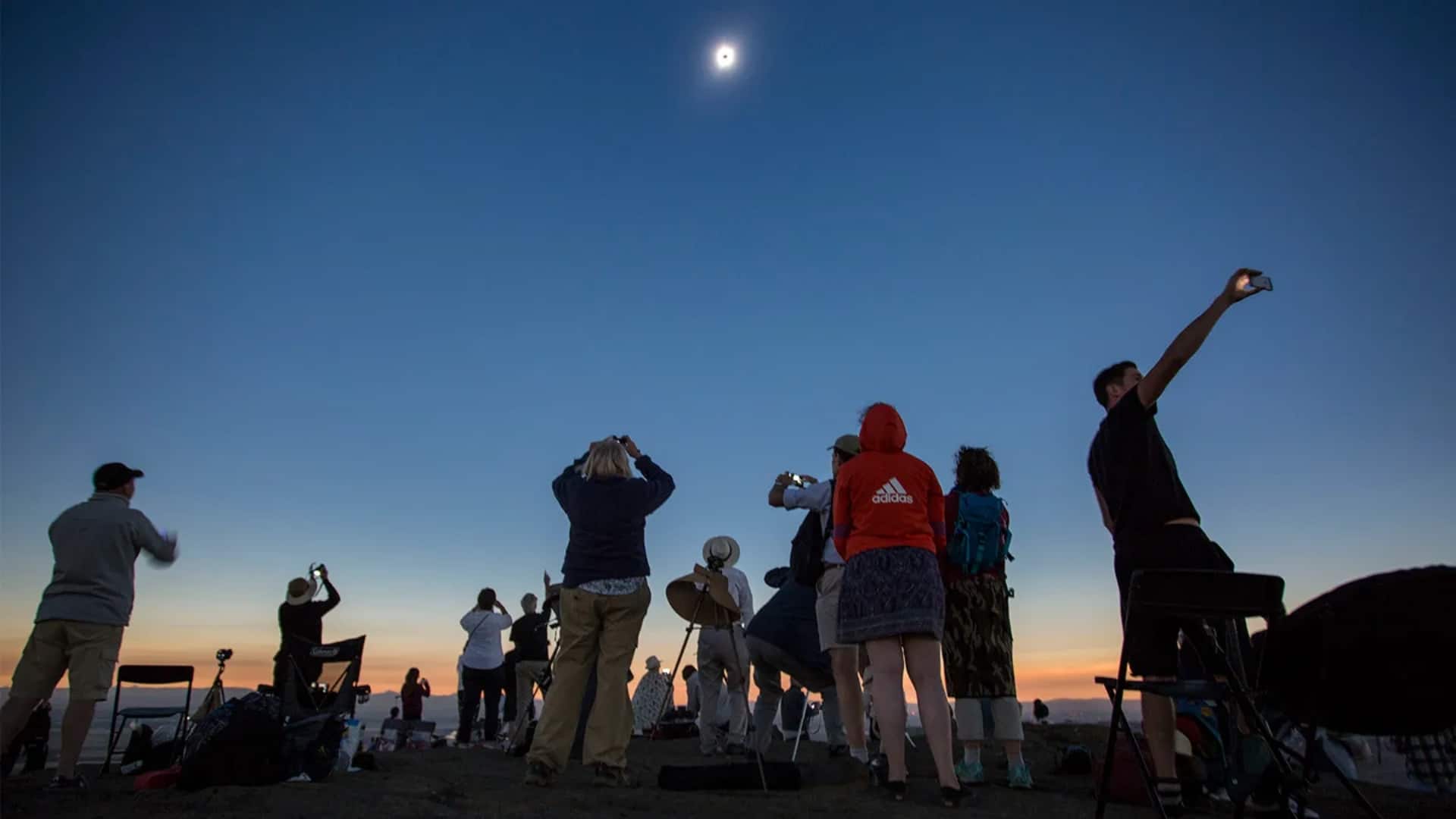


A total solar eclipse is usually introduced with a picture: a black circle, a silver-white corona, and a sky that appears to have forgotten the time of day. Yet photographs capture only a fraction of what happens. People who have stood in the Moon’s shadow often remember the chill on their arms, the insects beginning their evening songs, or the peculiar light that made familiar faces seem briefly unfamiliar. The transformation does not arrive all at once. For more than an hour, the Moon slowly covers the Sun while ordinary life continues beneath it. Then the final minutes compress everything. Colors weaken, shadows sharpen, winds change, animals respond, and distant horizons glow. The landscape has not moved, but it no longer behaves like the place that was there that morning.
#1: Colors Fade and Shift Under the Purkinje Effect
A red sweater can lose its warmth before the person wearing it has noticed that the sky is growing dark. Blue and green objects, meanwhile, may retain an unusual brightness, giving lawns, clothing, and painted surfaces a cool, almost stage-lit appearance. Human vision is moving through the dim region between daylight and darkness, where color-sensitive cone cells are surrendering part of the work to rod cells, which respond more strongly to blue-green wavelengths.