

Some destinations seem to have two completely different identities depending on when you arrive. The turquoise lake where travelers paddle in July may become a sheet of ice surrounded by snow, while green hiking trails can disappear beneath landscapes that look almost untouched by civilization. Winter does more than change the temperature—it alters colors, activities, wildlife, crowds, and sometimes the entire scale of a familiar view. From Alpine villages buried beneath fresh snow to American national parks transformed by ice, keep reading to see how places associated with picture-perfect summer vacations become remarkably different worlds once winter takes over.
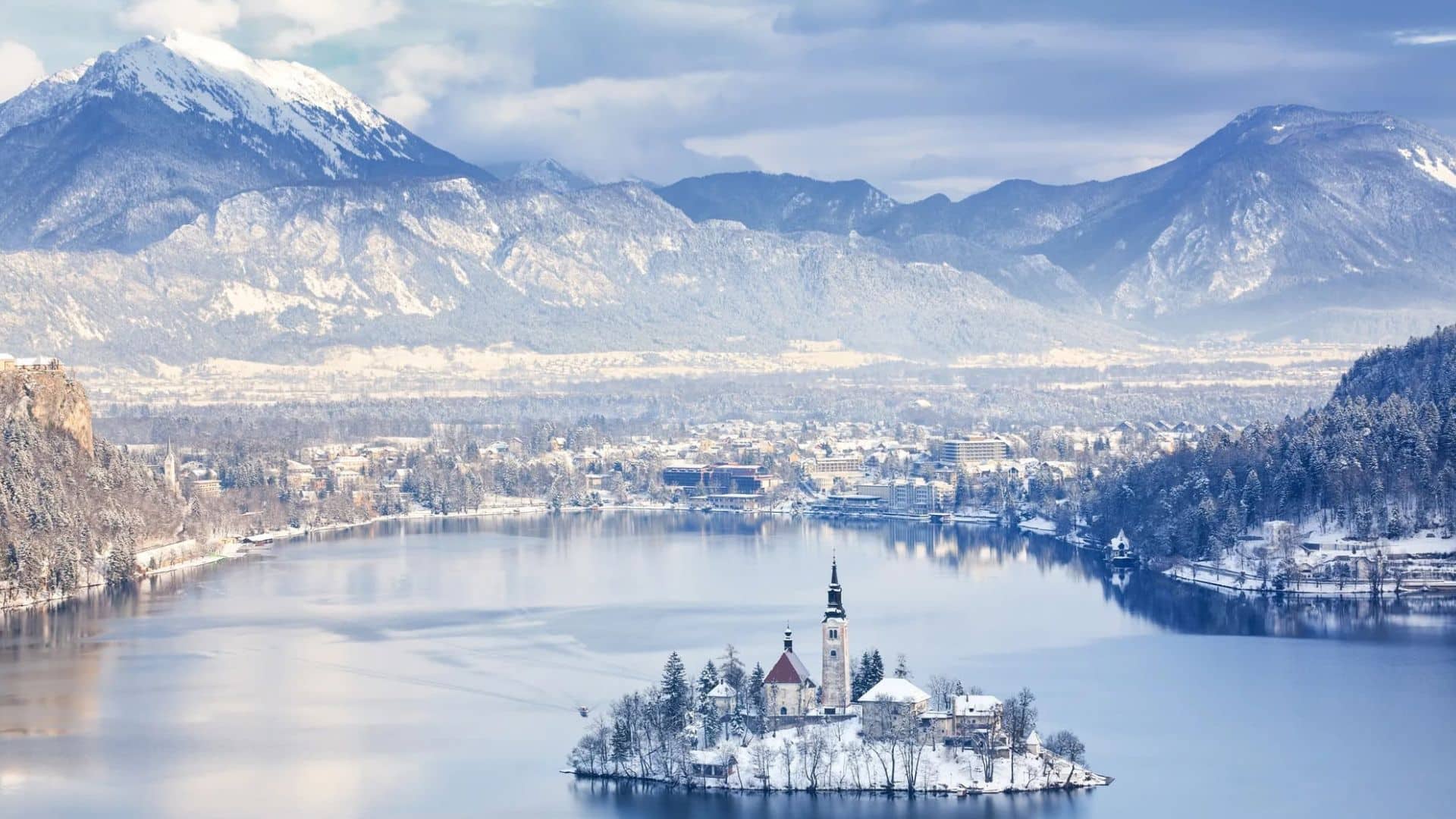
#1: Lake Bled Trades Emerald Green for Snow-Covered Stillness — Slovenia
During summer, Lake Bled looks almost impossibly lush, surrounded by green forests while traditional wooden boats carry visitors toward the tiny island at its center. Winter strips away much of that color and replaces it with snow-covered mountains, bare trees, mist, and a noticeably quieter shoreline. Bled Island and its famous church remain immediately recognizable, yet their surroundings can look dramatically different beneath fresh snowfall. On particularly cold days, ice may form around portions of the lake, although complete freezing is neither guaranteed nor something visitors should expect every winter. The Julian Alps become far more visually dominant once their peaks and slopes turn white, changing the balance of the entire panorama.