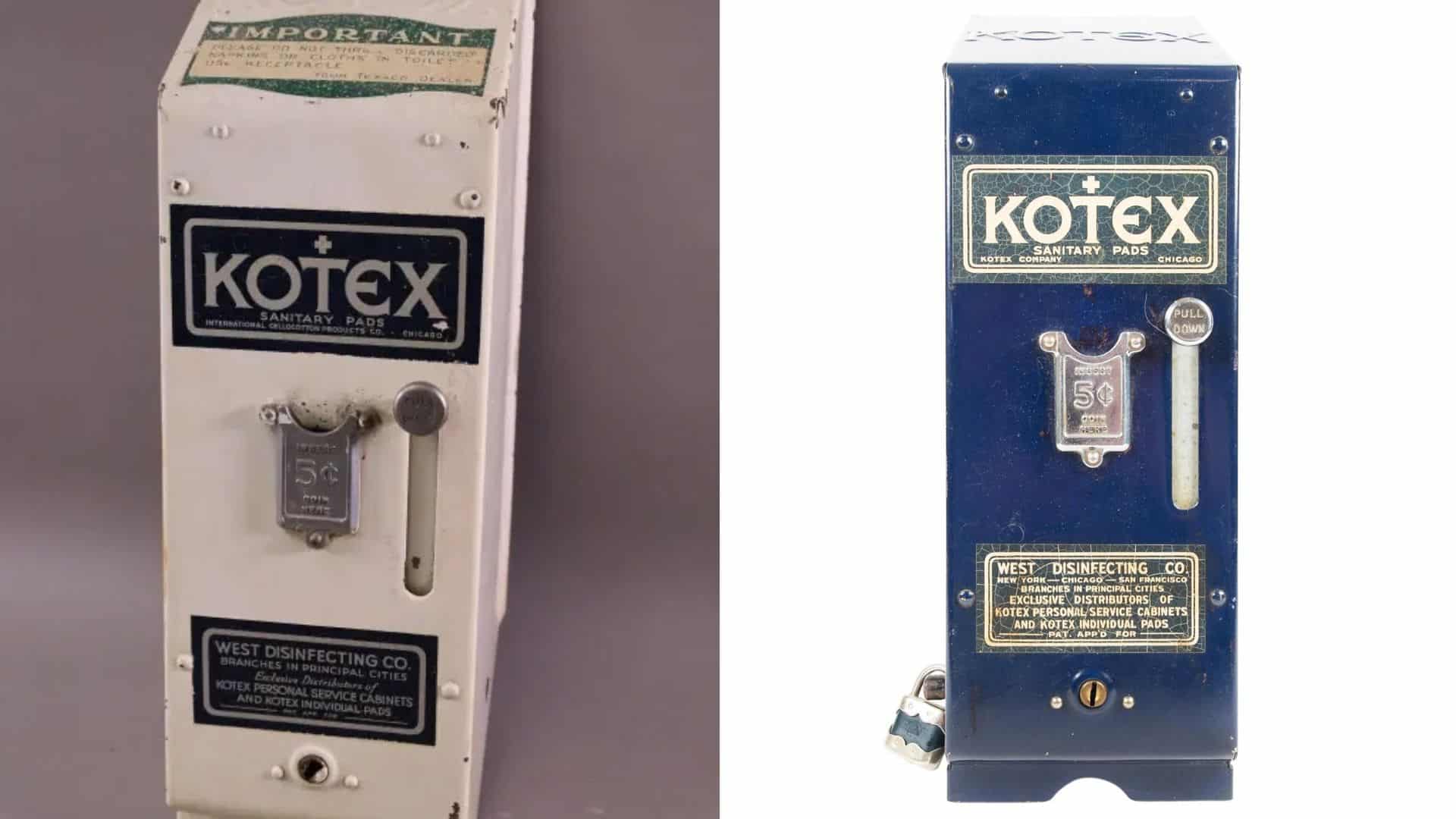


#9: Sanitary Napkins
Vending machines inside women’s restrooms solved a practical problem that could become urgent without warning. As commercially manufactured sanitary napkins became widely available during the twentieth century, dispensers allowed women to purchase individual products without leaving a workplace, school, factory, department store, theater, or other public building. Early machines typically operated with coins and dispensed pads in small boxes or wrappers, sometimes alongside tampons as those became increasingly common. The machines were particularly useful because menstrual products were not something every customer could simply postpone buying until later. They also offered privacy during an era when menstruation was discussed far less openly in American advertising and public life than it is today. Manufacturers historically relied on euphemistic language and discreet packaging, making the impersonal vending machine unusually compatible with the social conventions surrounding the product. Restroom dispensers never disappeared completely, although the model has changed significantly. A growing number of schools, workplaces, universities, and public facilities now provide menstrual products free rather than requiring coins.