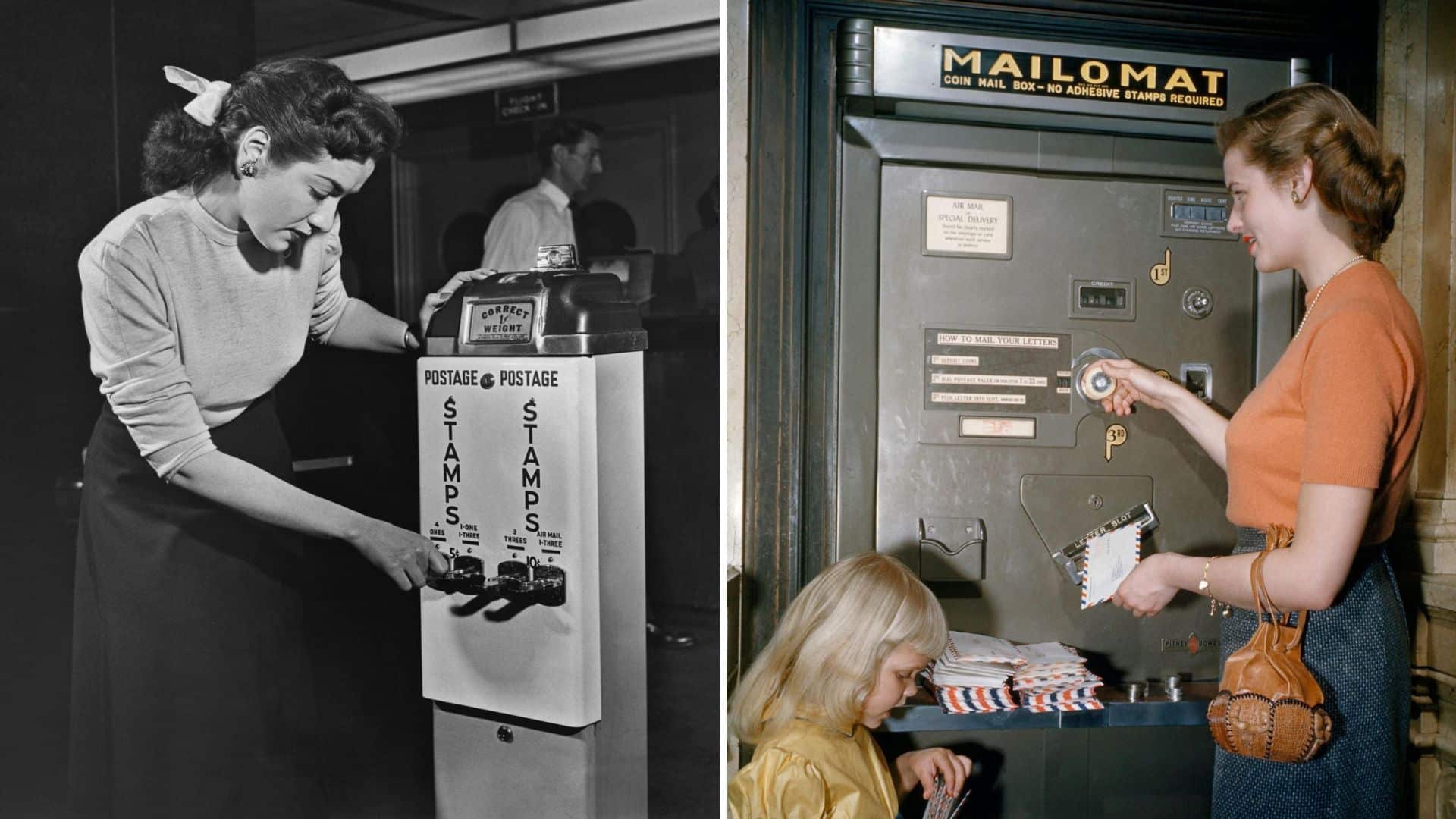


#5: Postage Stamps
There was a period when running out of stamps after the post office closed could be solved by feeding coins into a machine. The U.S. Postal Service and its predecessor, the Post Office Department, used stamp vending equipment to make basic postal supplies available without requiring a clerk at the counter. Machines appeared in post-office lobbies and other accessible locations, dispensing stamps or small booklets in predetermined denominations. This was particularly useful when postal facilities offered lobby access beyond regular service-window hours. Mechanical stamp sales also reflected a much larger everyday demand than many Americans experience today. Before email, electronic billing, messaging apps, and online accounts, households routinely mailed personal correspondence, bill payments, forms, greeting cards, and countless other documents. Keeping stamps available was therefore closer to maintaining a basic household supply than an occasional hobby purchase. Different generations of machines were introduced as postal rates and technology changed, with electronic vending eventually supplementing older mechanical systems. Online postage and automated postal kiosks later made the classic coin-operated stamp machine increasingly unnecessary.