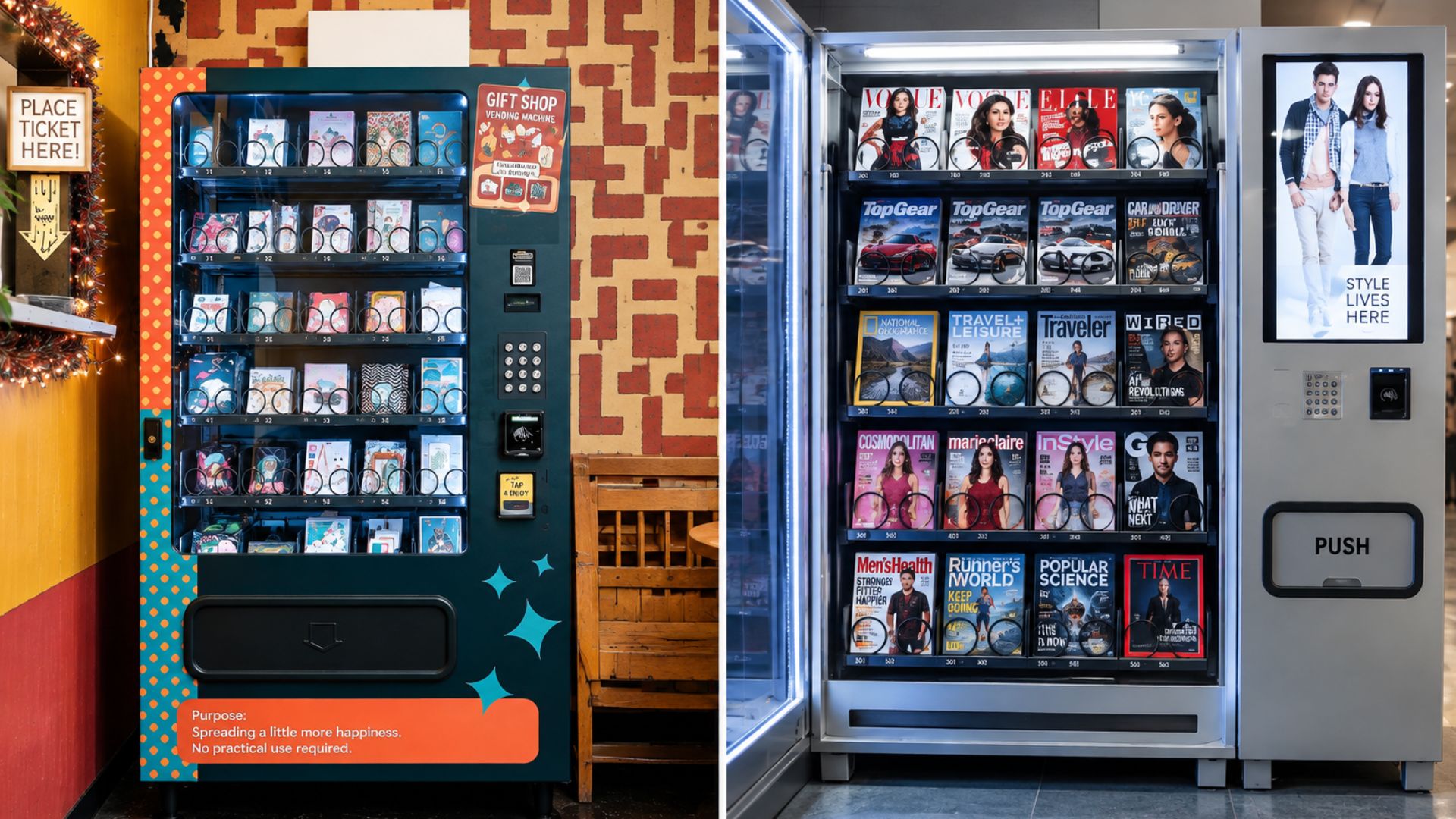


#4: Magazines
Magazines were particularly well suited to automated sales because their standardized shape, low price, and frequent publication schedule made them perfect impulse purchases. Coin-operated dispensers appeared in transportation terminals and other busy public spaces where commuters and travelers needed inexpensive entertainment. A customer could see the publication through the machine, insert the required amount, and retrieve an issue without waiting for a newsstand clerk. The machines belonged to a broader world in which newspapers, magazines, paperback books, cigarettes, and snacks competed for the spare change in travelers’ pockets. Their placement was strategic. Someone waiting for a train or bus had both idle time and an immediate reason to purchase something readable. Magazine vending also reflected how central print periodicals once were to American popular culture, when weekly and monthly publications delivered entertainment, celebrity coverage, news, hobbies, fiction, and specialized interests long before smartphones condensed those functions into one screen. The idea of buying a physical magazine from a machine now feels almost doubly obsolete: both the vending method and the dominance of print have faded.