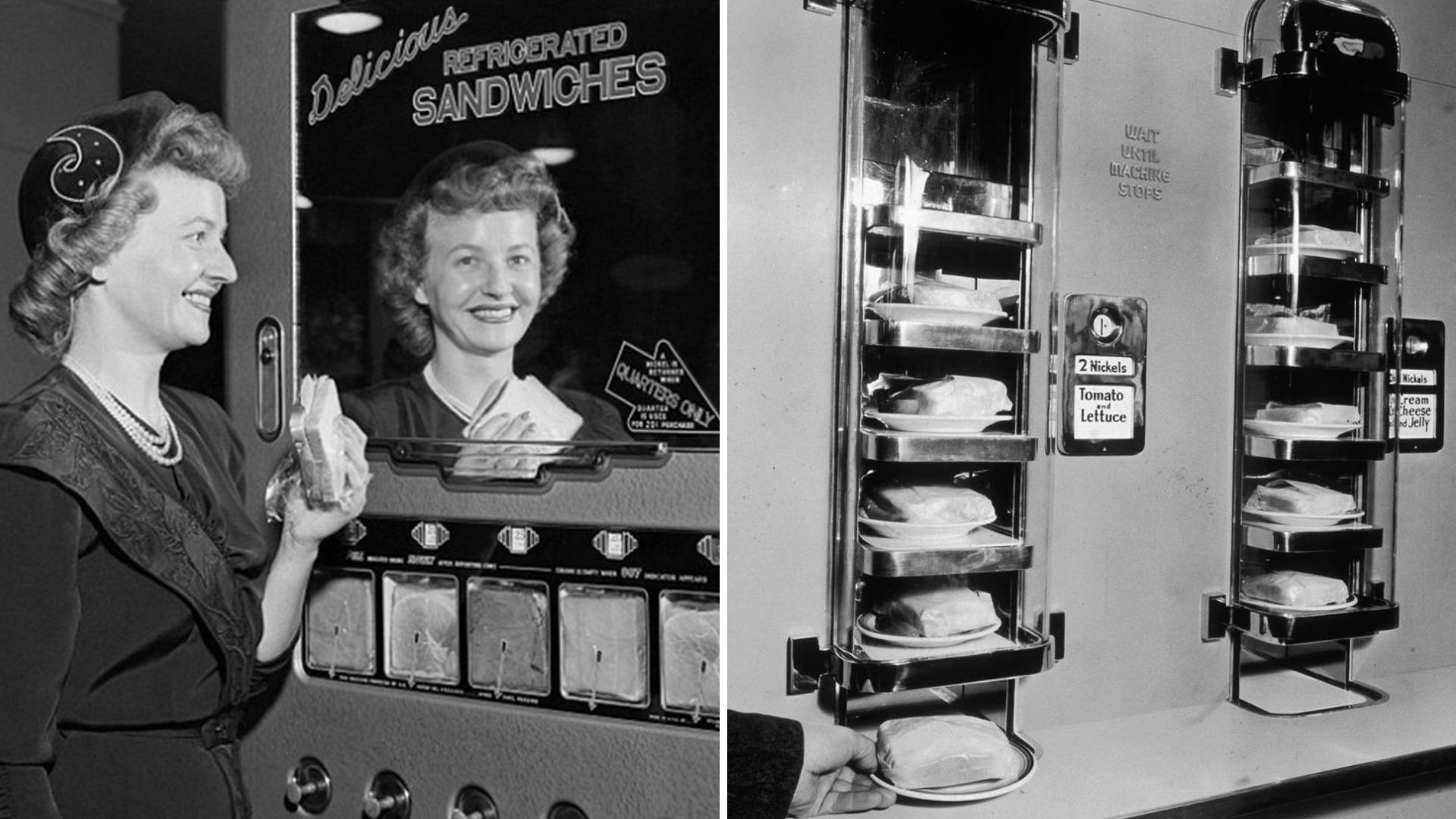


#17: Hot Sandwiches
Cold candy and soda were easy. A hot sandwich required the vending machine to start behaving like a tiny restaurant. During the great expansion of automatic food service after World War II, manufacturers developed equipment capable of selling packaged sandwiches that could be heated before the customer ate them. Some systems stored refrigerated products and used built-in heating technology, while others paired food vending with separate warming equipment. Hamburgers, cheeseburgers, hot dogs, and other familiar foods became natural candidates because they could be standardized, wrapped, transported, and reheated with relatively predictable results. Such machines were particularly attractive in factories, hospitals, offices, military facilities, and other workplaces operating beyond conventional restaurant hours. They also belonged to the period’s fascination with convenience foods, when freezing, refrigeration, disposable packaging, and microwave technology were reshaping American expectations about how quickly meals could be prepared. Quality was inevitably variable, and few people confused a machine-dispensed sandwich with diner cooking. But convenience was the real product.