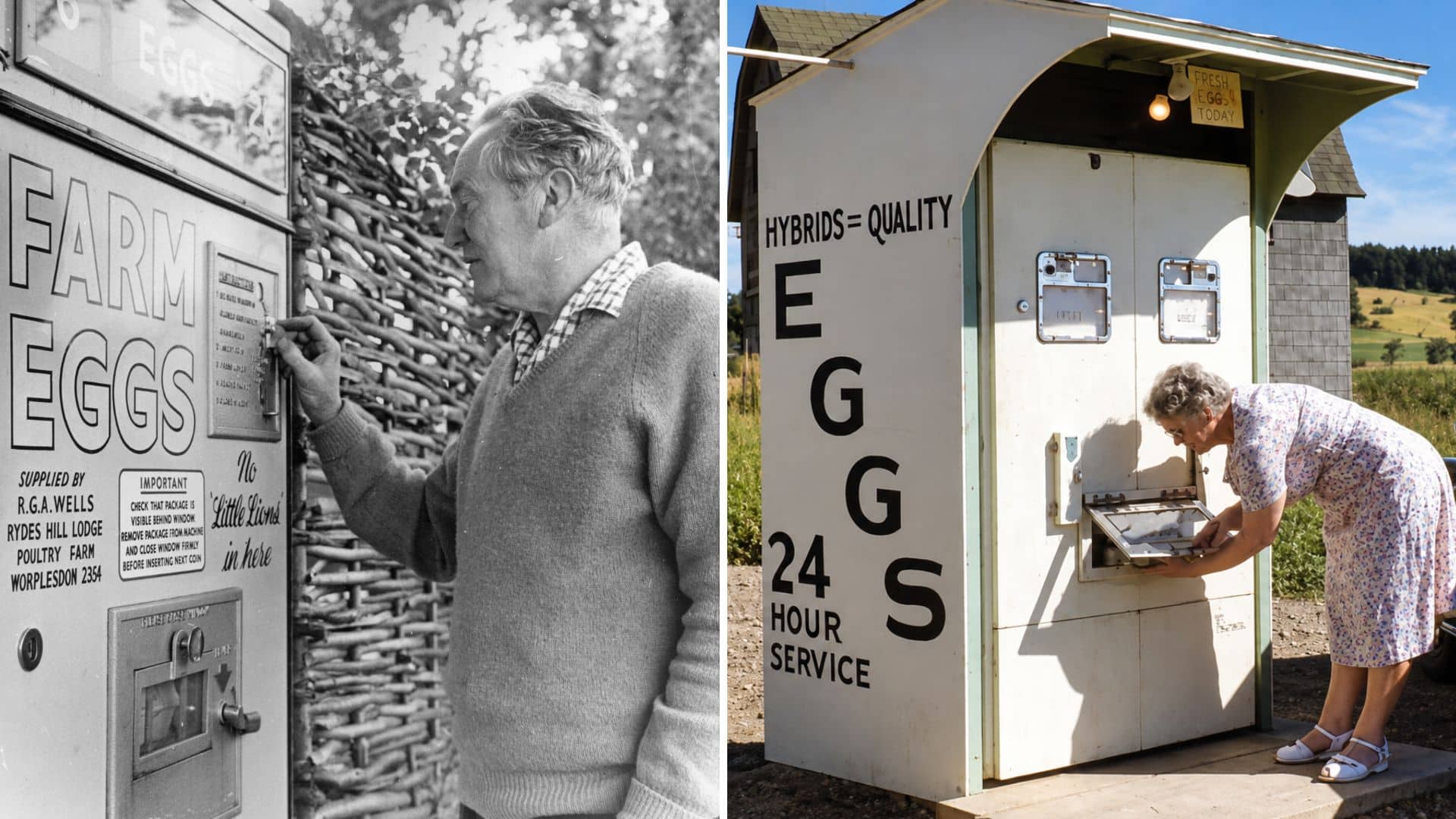


#13: Fresh Eggs
Eggs seem like almost the worst possible candidate for a vending machine. They are fragile, perishable, and famously intolerant of being dropped. That did not prevent farmers and vending-machine manufacturers from finding ways to sell them automatically. Refrigerated egg machines appeared in agricultural areas and roadside locations, allowing customers to purchase cartons without requiring a farm stand to remain staffed throughout the day. Instead of using the aggressive drop mechanism associated with snack machines, designs could rely on compartments, lockers, shelves, or controlled dispensing systems intended to protect the shells. The concept offered an important advantage to small producers: farmers could sell directly to customers for extended hours without paying someone to operate a shop continuously. Similar farm vending remains more visible in parts of Europe and Japan, but examples have existed in the United States as well, particularly where roadside direct-to-consumer agriculture made the arrangement practical. Their novelty comes from the contradiction between product and machine. Americans learned to expect vending machines to contain items capable of surviving a fall into a metal tray.