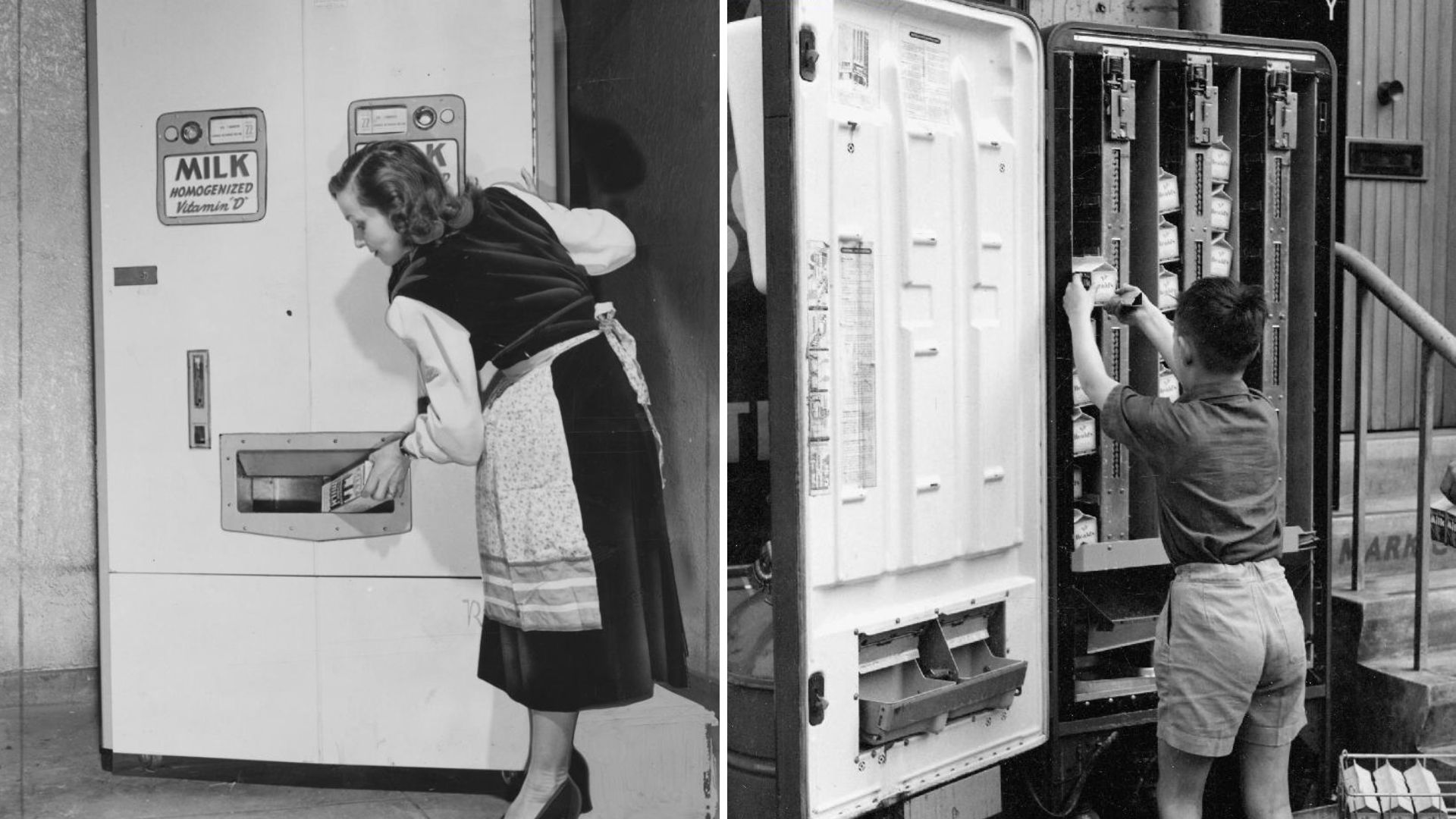


#12: Quarts of Milk
Milk once had enough urgency as a household purchase that Americans experimented with making it available from machines around the clock. During the mid-twentieth century, refrigerated vending machines could dispense bottles or cartons of milk in apartment complexes, factories, schools, service stations, and other locations where customers might need a quick supply without visiting a grocery store. Some machines sold full quarts, transforming one of the basic products associated with the neighborhood milkman into an automated transaction. The concept made particular sense during an era when fresh milk was consumed heavily by families and home delivery remained familiar. Refrigeration technology had to be reliable because the machine was responsible not merely for dispensing the product but for keeping a highly perishable food at a safe temperature until purchase. Milk vending never replaced supermarkets or doorstep delivery on a broad scale in the United States, but it reflected enormous optimism about unattended retail. A machine did not need to sell only shelf-stable candy or gum if engineers could keep its contents cold. Today forgetting milk usually means stopping at a convenience store.