

Stand in front of a vending machine today and the choices are usually predictable.
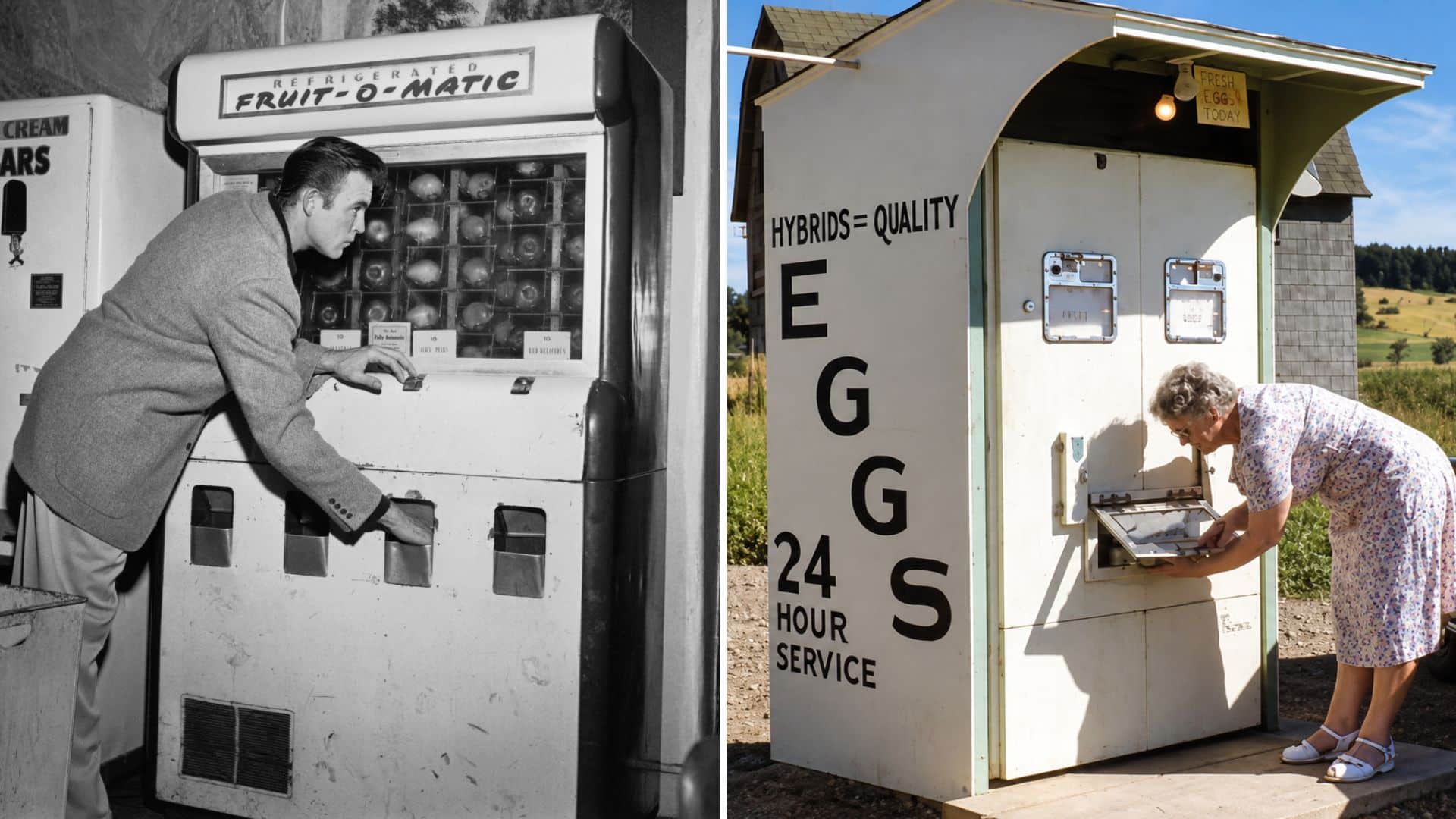
Chips. Candy. Soda. Maybe bottled water if the machine is feeling ambitious. Its ancestors had considerably bigger plans. Americans once dropped coins into machines expecting everything from an insurance policy to fresh eggs, stockings, razor blades, steaming soup, and even something resembling an entire dinner to appear on the other side.
For a while, almost any shopping trip seemed capable of becoming automated.
So keep some change handy and take a look inside the vending machines of the past. Long before online shopping promised instant convenience, Americans were already discovering just how many things could be purchased without ever speaking to a clerk.
#1: Flight Insurance Policies
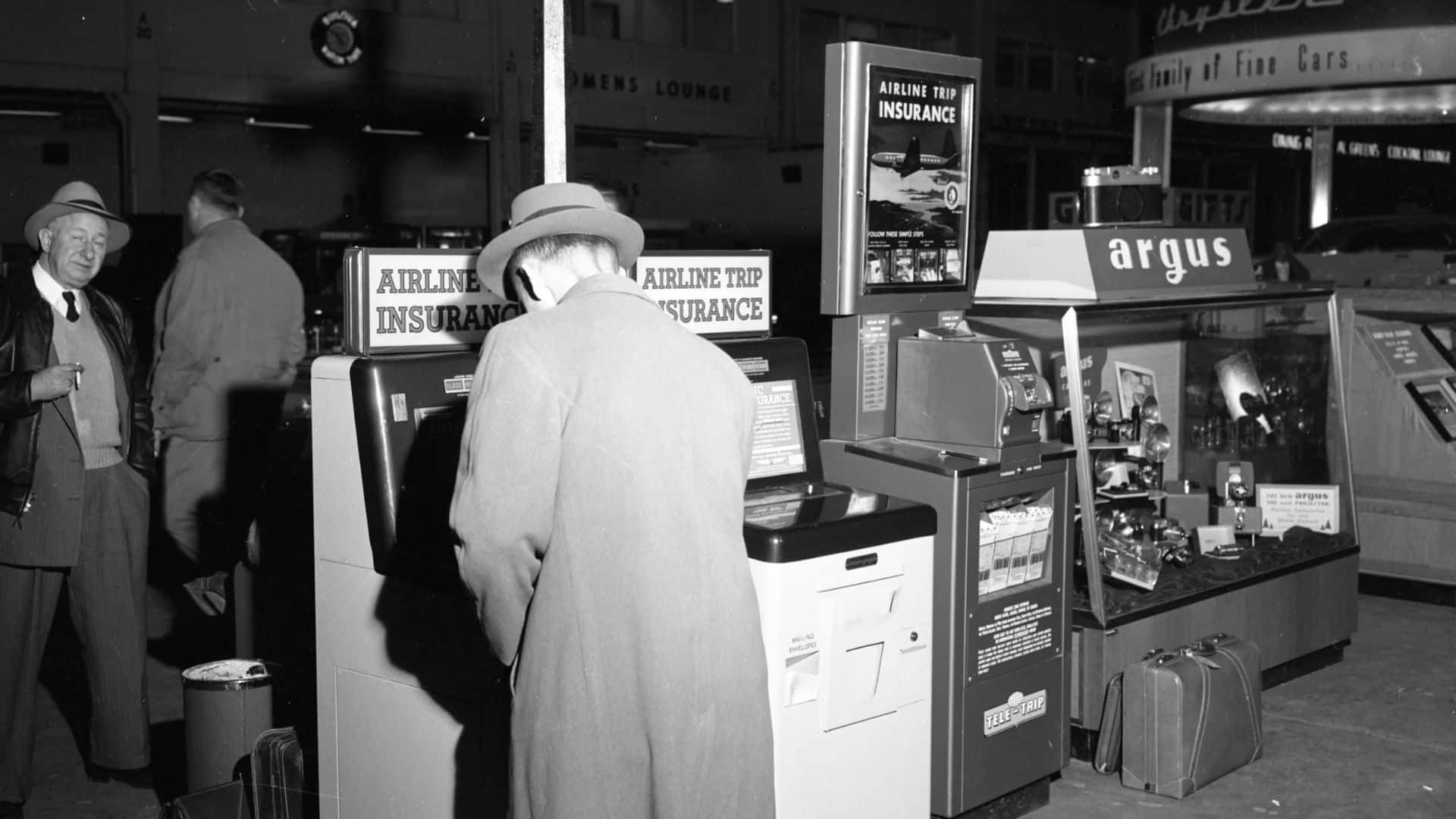
Imagine arriving at an airport, checking your luggage, and then stopping at a vending machine to insure yourself against dying on the flight. For decades, that was an ordinary enough part of American air travel that special machines sold short-term accident policies inside airport terminals. A traveler could insert money, select the desired coverage, complete the necessary information, and receive a policy covering a particular trip. The machines became especially familiar during the postwar expansion of commercial aviation, when flying was becoming more accessible but still carried an aura of danger for many passengers. Policies could provide substantial payouts to designated beneficiaries if the traveler died in a covered aviation accident. The concept eventually became so culturally recognizable that airport flight-insurance machines appeared in novels and movies, including plots in which someone conveniently purchases a large policy immediately before disaster. Improved perceptions of airline safety, changes in insurance practices, and the availability of broader travel coverage gradually made the machines far less common.