

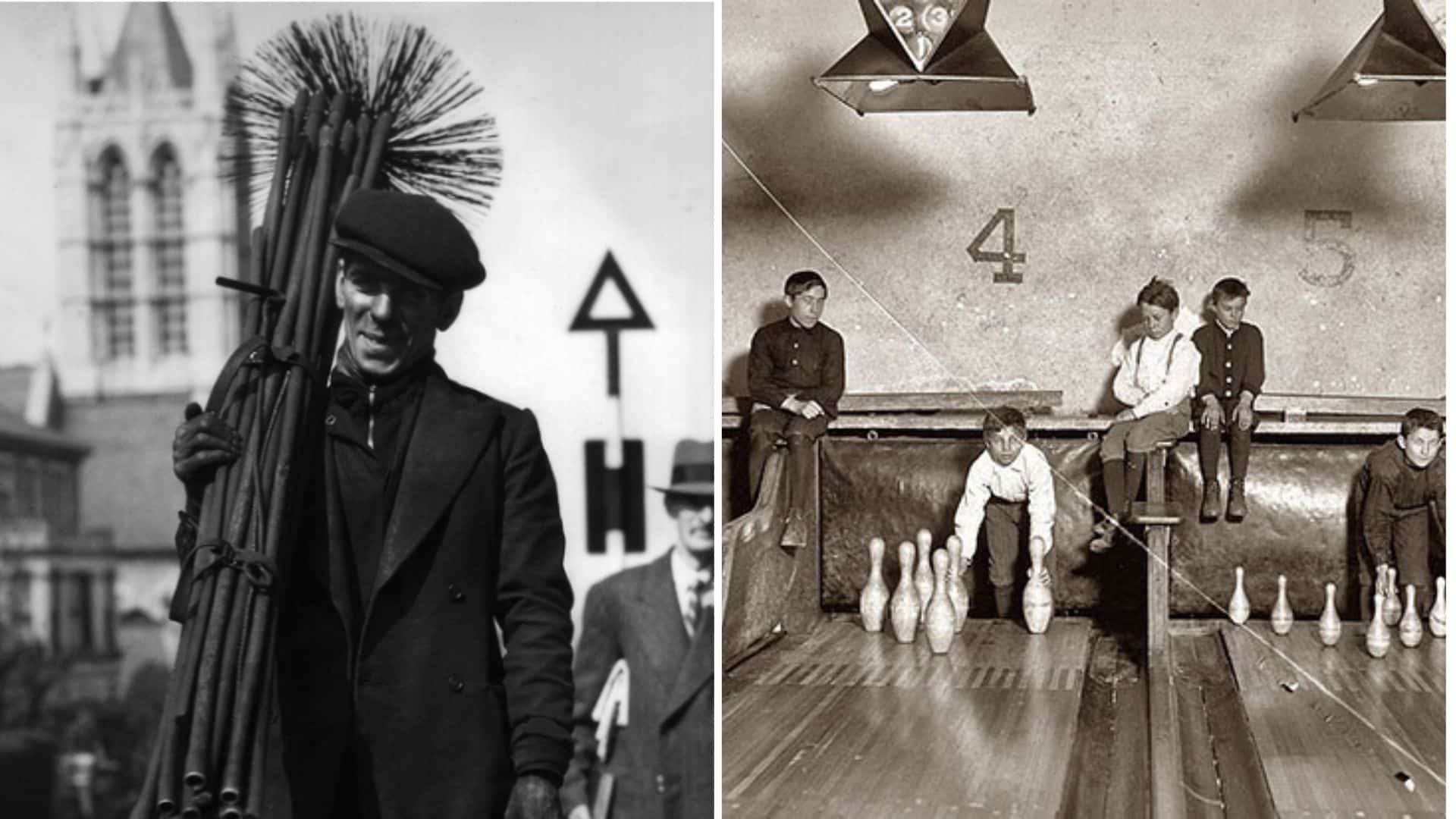
Before automation, refrigeration, radar, and digital communication transformed daily life, people earned wages doing work that now sounds invented. Children reset bowling pins, operators connected telephone calls by hand, and human “computers” calculated flight paths with pencils. These twenty jobs were real features of twentieth-century workplaces, though a few survive today in ceremonial or highly specialized forms. Their disappearance reveals how quickly machinery changed labor—and how many ordinary services once depended on patience, muscle, memory, balance, and remarkably repetitive routines.
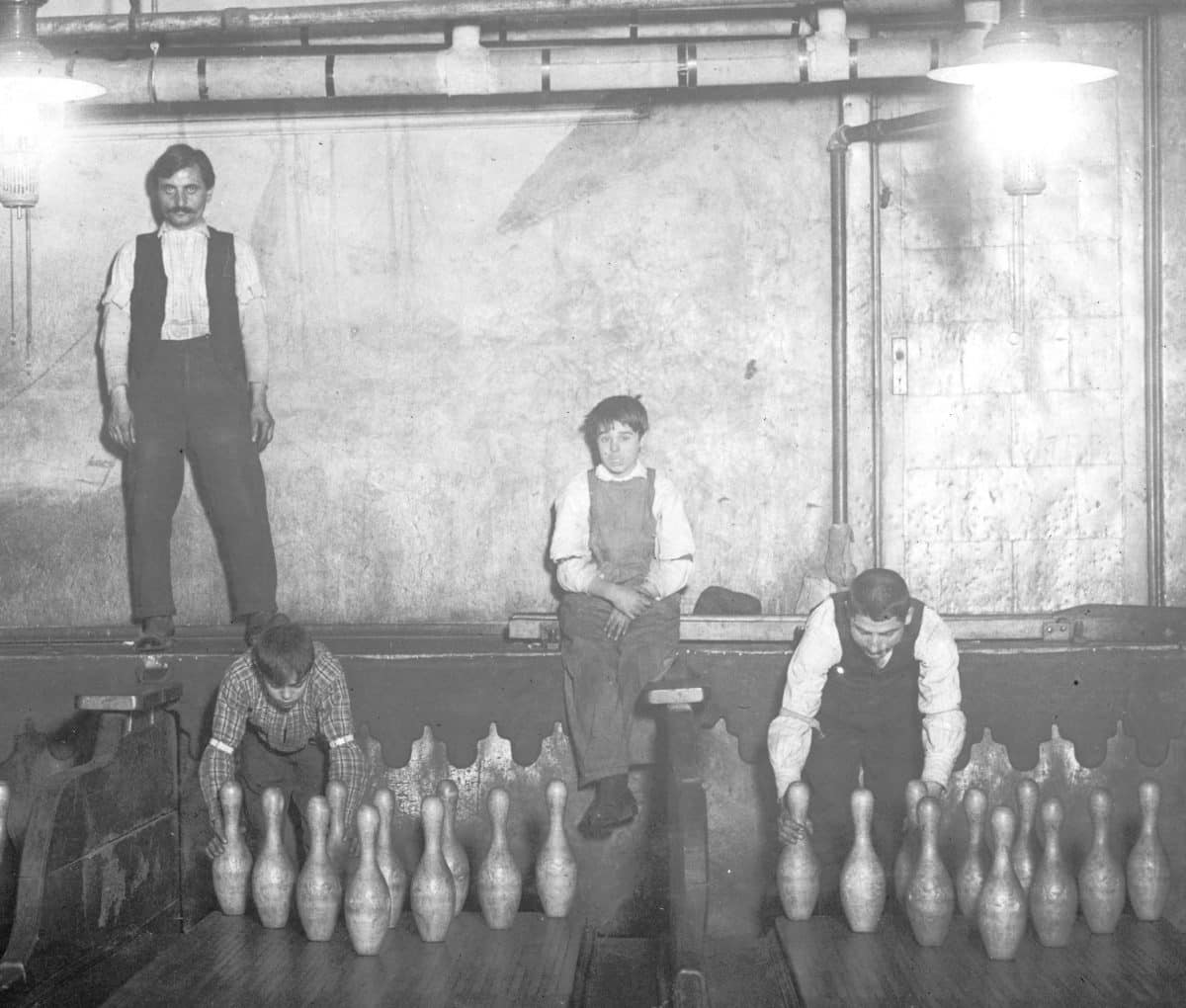
#1: Bowling Pinsetter
Before automatic machinery, bowling alleys employed pinsetters, often called pinboys, to crouch behind the lanes, clear fallen pins, reset ten-pin formations, and roll balls back toward players. The work was noisy, repetitive, poorly paid, and dangerous when bowlers released balls too quickly. AMF publicly introduced its automatic pinspotter in 1946, and large-scale production gradually eliminated the job. Modern bowlers rarely consider the teenagers once scrambling behind every successful strike in smoky neighborhood alleys every night.