

Imagine dumping a century’s worth of Halloween costumes onto the same living-room floor. At first, it would look like a random pile of masks, capes, plastic fangs, pointed hats, rubber monsters, and homemade sheets. Put those costumes back in chronological order, however, and something curious begins to happen. The monsters change when society changes. Old religious fears give way to Gothic creatures, science creates new nightmares, the atomic age produces mutants, and eventually the threat moves from haunted graveyards to suburban streets, laboratories, and contaminated air. So don’t just look at what Americans dressed as on Halloween. Look at what each generation chose to make frightening, and see how closely the costume closet followed the anxieties outside the front door.
#1: Ghost Costumes – Death and Returning Spirits (Colonial Era–Late 1800s)
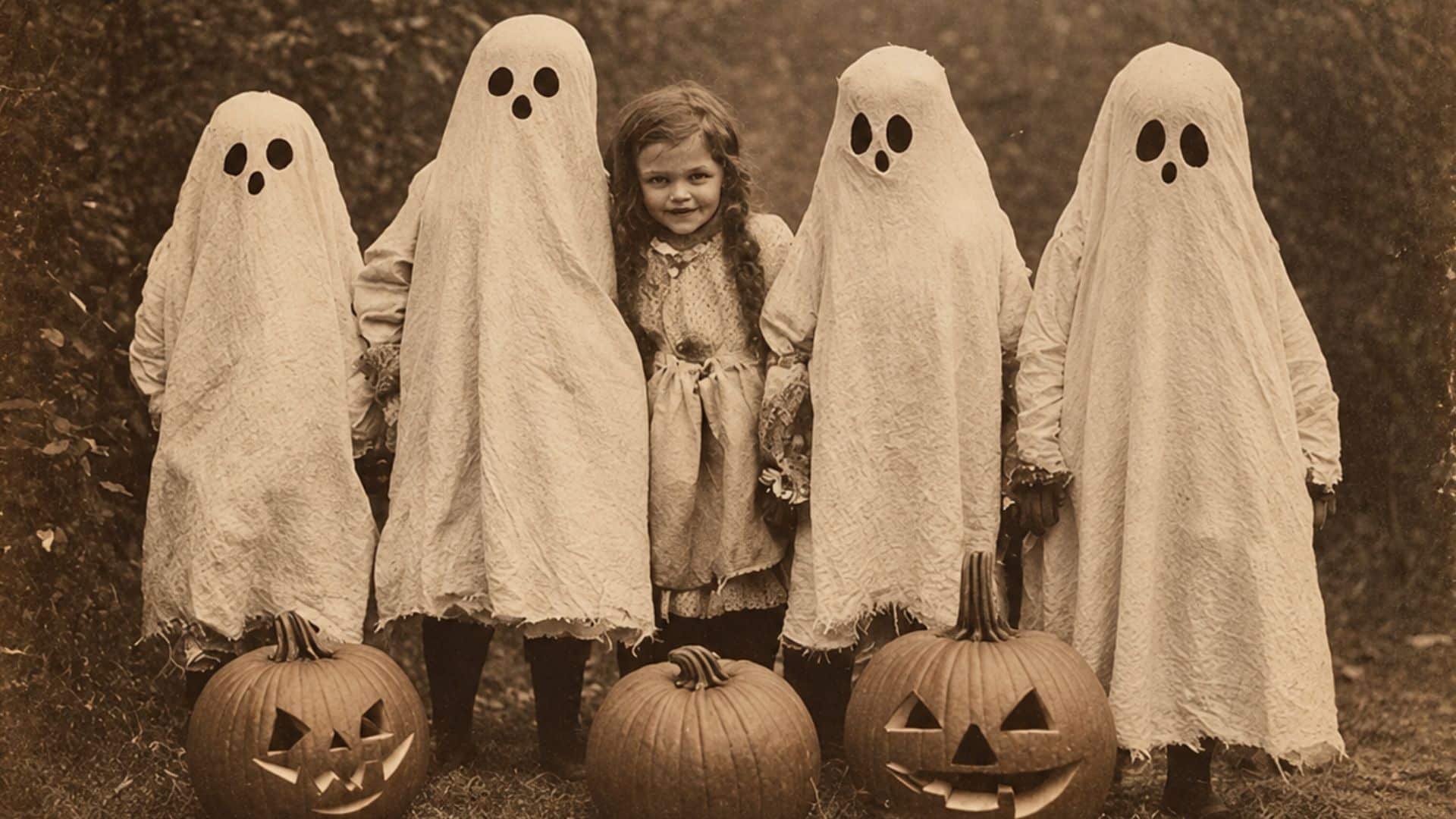
Long before Americans could buy a packaged ghost costume, stories of the dead returning to trouble the living were already embedded in European traditions carried across the Atlantic. Colonial America contained multiple religious and folk traditions concerning spirits, apparitions, haunted places, and signs supposedly associated with death. Halloween itself did not immediately become a major nationwide American holiday, but nineteenth-century immigration—particularly from Ireland and Scotland—helped popularize customs connected with supernatural beings and the boundary between the living and the dead. As Halloween celebrations expanded during the late nineteenth century, ghosts became an obvious visual language for those older fears. The costume required almost nothing: pale clothing, fabric, homemade masks, or eventually the familiar white sheet could turn an ordinary person into a wandering spirit. What made the image effective was its simplicity. A ghost did not require audiences to understand a particular novel or movie; they needed only to recognize the possibility that death might not be the end of someone’s presence.