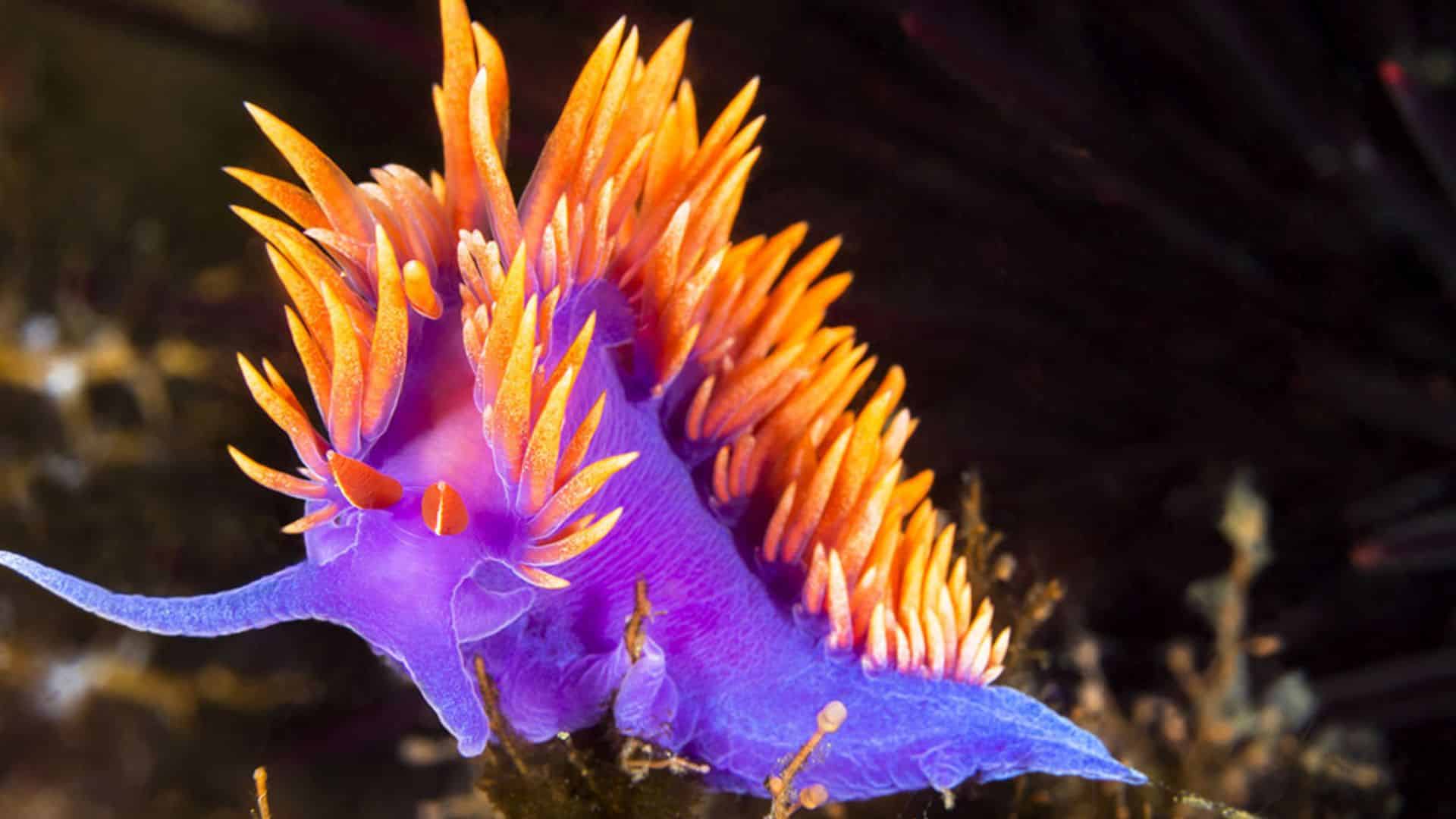


#7: Nudibranchs – Steal Stinging Cells From Their Prey
Some nudibranchs can eat an animal armed with microscopic stinging weapons and somehow emerge from the meal carrying those weapons themselves. Aeolid nudibranchs feed on cnidarians such as hydroids, sea anemones, and related organisms containing nematocysts. Instead of digesting every stinging capsule, the slug can transport intact nematocysts through its digestive system into specialized structures called cnidosacs located at the tips of projections known as cerata. The stolen cells—often called kleptocnidae—can remain functional there and contribute to the nudibranch’s defense. A predator biting the wrong part of the slug may therefore encounter weapons originally manufactured by somebody else. The biological mechanisms allowing nudibranchs to consume cnidarians without triggering or destroying all of their nematocysts have attracted considerable scientific interest. Not every nudibranch uses this strategy; the group contains an enormous variety of feeding habits and defensive systems. Among the species that do, however, the process represents something more sophisticated than ordinary chemical sequestration. They are preserving cellular structures capable of firing after leaving the organism that created them.