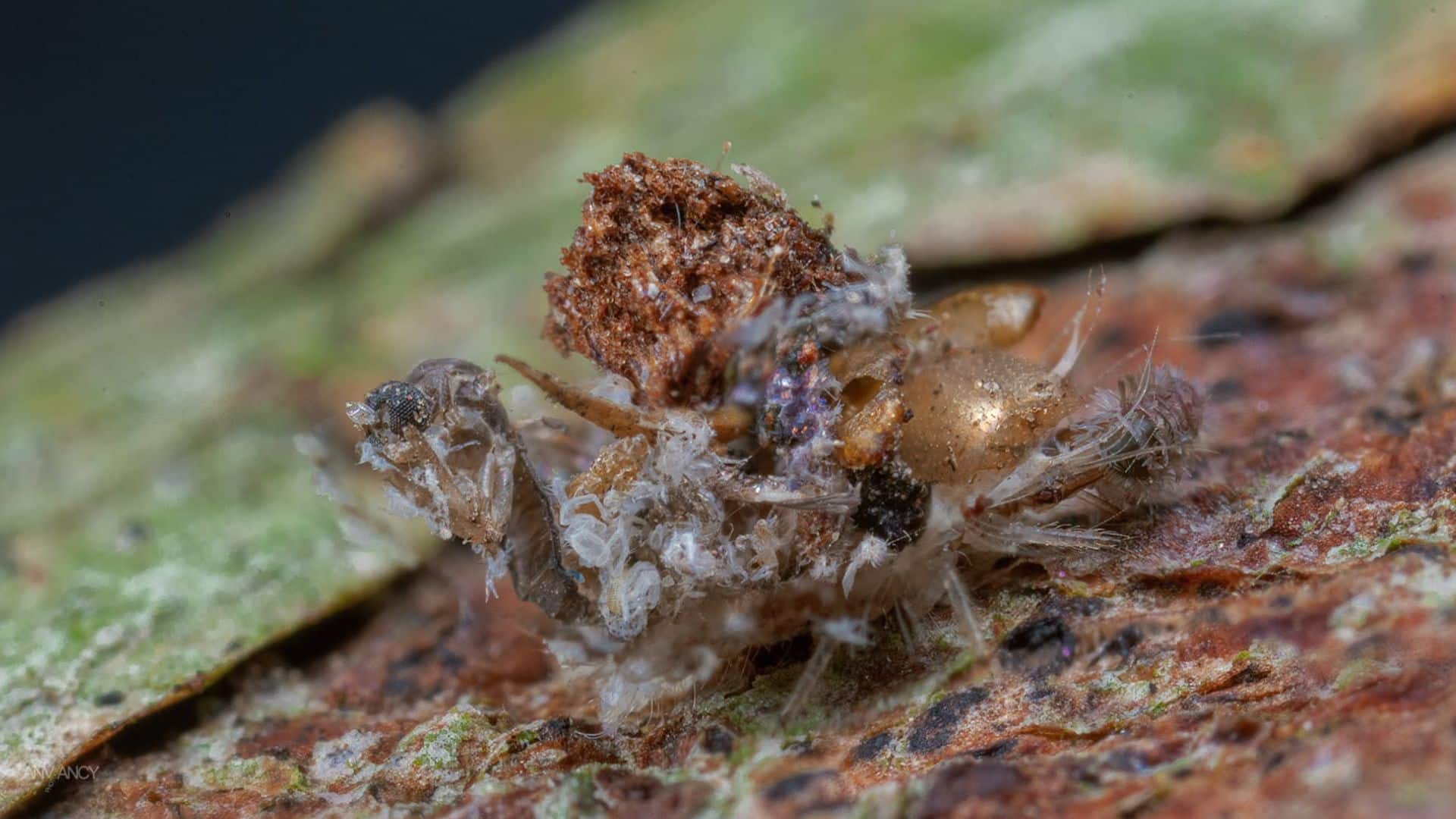


#11: Lacewing Larvae – Cover Themselves With Prey Remains
Some lacewing larvae take the idea of camouflage far beyond simply matching the color of a leaf. Species commonly called debris-carrying lacewings cover their backs with pieces of vegetation, bark, lichens, wax, and other material collected from their surroundings. Certain larvae add the empty bodies or waxy remains of insects they have already eaten, effectively turning previous meals into part of a portable disguise. Specialized bristles on the larva’s back help hold this irregular pile in place as the insect moves and hunts. The covering can make the predator extremely difficult to recognize against a cluttered plant surface and may also interfere with animals attempting to attack it. The strategy becomes particularly interesting when lacewing larvae hunt aphids or other insects guarded by ants. By disguising themselves with material associated with their prey, some larvae may reduce the likelihood of being detected and attacked by those defenders. Not every debris-carrying lacewing uses prey remains, and the materials selected vary among species and habitats. What unites them is the remarkable transformation of loose environmental material into wearable concealment.